
What is sustainable electronics: EU guide for 2026
Most people think sustainable electronics just means recycling old phones, but that’s only scratching the surface. With new EU regulations reshaping how smartphones, tablets, and laptops are designed and sold across Europe, understanding what truly makes electronics sustainable has never been more important for your wallet and the planet. From mandatory repairability scores to energy efficiency labels, European consumers now have powerful tools to reduce environmental impact while making smarter purchasing decisions. This guide breaks down EU definitions, explains key sustainability metrics, compares product lifecycles, and shows you exactly how to choose electronics that last longer and perform better.
Table of Contents
- Key takeaways
- Understanding sustainable electronics: EU definitions and design principles
- How repairability and energy efficiency shape sustainable electronics
- Environmental impact comparison: laptops, desktops, and materials used
- Practical tips for consumers to embrace sustainable electronics
- Shop sustainable electronics at OnlineStore24 EU
- FAQ
Key Takeaways
| Point | Details |
|---|---|
| EU definition and scope | Sustainable electronics are products designed under ecodesign rules to lower environmental impact across their full lifecycle. |
| Core ecodesign pillars | Durability, repairability, energy efficiency, and recyclability shape how devices are designed to lower environmental impact. |
| Repairability scores | A to E scores reflect how easily a device can be repaired using common tools and available spare parts. |
| Energy labels | Energy consumption limits for active use and standby help buyers compare efficiency across models. |
| Take back programs | Programs to recover, refurbish, and recycle devices support longer lifecycles and resource conservation. |
Understanding sustainable electronics: EU definitions and design principles
Sustainable electronics refers to products designed under ecodesign principles to reduce environmental footprint over their entire lifecycle, as defined in EU Regulation 2024/1781. This framework establishes mandatory requirements for how manufacturers design, produce, and support consumer electronics sold across European markets. The regulation targets smartphones, tablets, laptops, and other digital devices that previously lacked standardized sustainability criteria.
Ecodesign principles focus on four core areas that directly impact environmental performance. Durability ensures products withstand normal use for extended periods without premature failure. Repairability guarantees consumers and technicians can access spare parts, tools, and documentation needed to fix devices rather than replace them. Energy efficiency minimizes electricity consumption during active use and standby modes. Recyclability requires materials and construction methods that enable effective recovery of valuable resources at end of life.
These principles work together to address the full environmental cost of electronics. Manufacturing accounts for the largest share of carbon emissions in most device lifecycles, so extending product lifespan through better design delivers measurable climate benefits. Resource extraction for rare earth metals, plastics, and other materials creates additional environmental pressures that circular economy approaches help mitigate.
Key ecodesign requirements now mandatory for smartphones and tablets include:
- Battery must retain 80% capacity after 1,000 charge cycles
- Spare parts available for minimum 7 years after last unit sold
- Repair manuals and software tools provided to independent repair shops
- Devices must survive 5,000 tumble test cycles and specific drop heights
- Energy consumption limits during active use and network standby
“Ecodesign requirements shall ensure that products placed on the market are designed to be durable, reliable, reusable, upgradeable, reparable, easier to maintain, refurbish and recycle, and energy and resource efficient.”
For European consumers shopping for eco friendly gadgets, these regulations create transparent standards that make sustainability claims verifiable rather than vague marketing promises. Understanding these frameworks helps you identify genuinely sustainable options in a marketplace filled with greenwashing.
How repairability and energy efficiency shape sustainable electronics
Repairability scores provide consumers with standardized ratings from A to E that measure how easily you can repair a device when components fail or wear out. These scores evaluate three critical factors: disassembly complexity using common tools, availability and pricing of spare parts from manufacturers, and quality of repair documentation including diagrams and instructions. A device earning an A rating features modular construction with readily available parts and comprehensive repair guides, while E-rated products use permanent adhesives, proprietary fasteners, or withhold technical information.

EU rules effective June 2025 mandate energy labels and ecodesign requirements for smartphones and tablets, promoting longer lifespan and improved efficiency. Energy efficiency labels display letter grades based on measured power consumption during typical use scenarios, charging efficiency, and standby power draw. These labels help you compare devices and calculate long-term electricity costs, with higher-rated products delivering measurable savings over their operational life.
| Repairability Score Criteria | Energy Label Classes |
|---|---|
| Disassembly time and tool requirements | Active mode power consumption |
| Spare parts catalog and pricing transparency | Charging efficiency percentage |
| Repair manual completeness and accessibility | Network standby power draw |
| Fastener types and adhesive use | Battery capacity retention |
| Software lock restrictions | Display brightness efficiency |
When shopping for sustainable electronics, follow these verification steps:
- Check the product listing or packaging for the repairability score label displayed as a letter grade
- Visit the EU EPREL database at eprel.ec.europa.eu and search the product model number
- Compare energy efficiency ratings between similar devices in your target category
- Review spare parts availability and pricing on the manufacturer’s official website
- Verify warranty terms cover battery replacement and common component failures
Pro Tip: The EPREL database reveals whether manufacturers registered their products correctly and helps you spot greenwashing. If a retailer claims high sustainability ratings but the product doesn’t appear in EPREL or shows different specifications, that’s a red flag warranting further investigation before purchase.
These tools transform abstract sustainability claims into concrete metrics you can evaluate. When comparing smartphones or tablets for your next purchase, prioritize models with A or B repairability scores and top-tier energy labels to maximize both environmental benefits and long-term value.
Environmental impact comparison: laptops, desktops, and materials used
Lifecycle assessment data reveals significant differences in carbon footprint between common electronics categories. Laptops generate lower emissions than desktops over a typical four-year lifespan, with manufacturing dominating total environmental impact regardless of device type. European consumers benefit from cleaner electricity grids during the use phase, reducing operational emissions compared to regions dependent on fossil fuel generation.
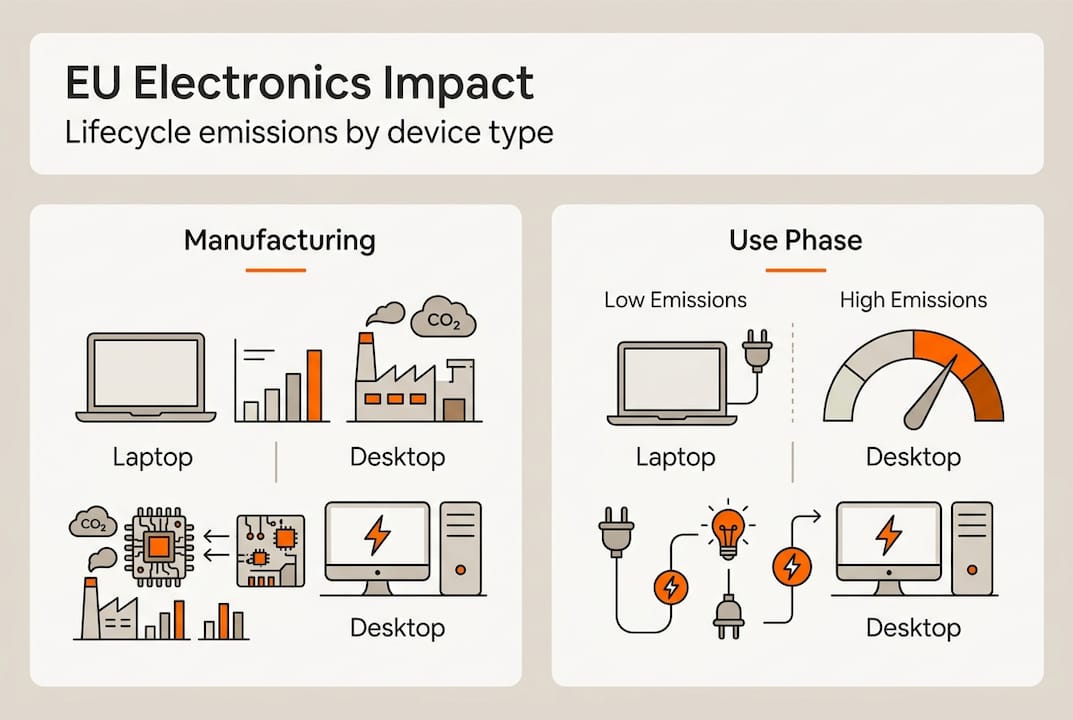
| Device Type | Manufacturing Emissions (kg CO2e) | 4-Year Use Emissions (kg CO2e) | Total Lifecycle (kg CO2e) | Average Lifespan |
|---|---|---|---|---|
| Standard Laptop | 180-220 | 45-65 | 225-285 | 4-6 years |
| Desktop PC | 250-320 | 120-180 | 370-500 | 5-8 years |
| Tablet | 90-130 | 15-25 | 105-155 | 3-5 years |
| Smartphone | 55-85 | 8-15 | 63-100 | 2-4 years |
Material choices during manufacturing create cascading environmental effects throughout the product lifecycle. Recycled plastics and metals reduce virgin resource extraction while typically requiring less energy to process than raw materials. Aluminum recovered from old devices uses 95% less energy than producing new aluminum from bauxite ore. Similarly, recycled rare earth elements avoid the toxic mining processes and habitat destruction associated with primary extraction.
Key material and design features that enhance sustainability:
- Modular components allowing targeted upgrades without replacing entire devices
- Recycled content meeting EPEAT-SUR minimum thresholds for plastics and metals
- Biobased materials derived from renewable sources replacing petroleum-based plastics
- Reduced packaging using recycled cardboard and eliminating plastic films
- Standardized ports and connectors extending accessory compatibility across device generations
Europe’s electricity generation mix significantly affects use-phase emissions. Countries with high renewable energy penetration see dramatically lower operational carbon footprints for the same devices compared to coal-dependent regions. This geographic advantage makes extending device lifespan through repair even more impactful for European consumers, since manufacturing emissions dominate your total environmental footprint.
When selecting electronics for your home, consider both the initial carbon cost and potential lifespan. A desktop consuming more electricity but lasting eight years may deliver better overall sustainability than a laptop replaced every three years. Material transparency matters too, with manufacturers increasingly required to disclose eco friendly materials and recycled content percentages under evolving EU regulations.
Practical tips for consumers to embrace sustainable electronics
European consumers can dramatically reduce their electronics footprint through informed purchasing and maintenance decisions. Start by checking repairability scores and energy labels before buying any device, using the EPREL database to verify manufacturer claims. Favor products with modular designs that allow component upgrades rather than full device replacement when needs change or technology advances.
Actionable steps for sustainable electronics ownership:
- Prioritize devices rated A or B for repairability when comparing similar models
- Check energy efficiency labels and calculate long-term electricity costs before purchase
- Choose manufacturers offering 7+ years of spare parts availability and software updates
- Select products with documented recycled content meeting EPEAT-SUR standards
- Verify warranty coverage includes battery replacement and common wear components
EU consumer guidance emphasizes repairability scores, EPREL verification, extending device life through repairs, and using take-back programs to minimize e-waste. When components fail, seek certified repair services using genuine parts rather than immediately replacing devices. Many manufacturers now provide detailed repair guides and sell spare parts directly to consumers and independent repair shops, making DIY fixes increasingly accessible.
Repair over replacement delivers multiple benefits beyond environmental impact. You avoid the upfront cost of new devices, retain familiar interfaces and data, and support the growing repair economy creating local jobs. Software updates extend device relevance even as hardware ages, with security patches and feature improvements adding years of useful life.
Pro Tip: Avoid devices with permanent adhesives sealing batteries or displays, proprietary screws requiring special tools, or software locks preventing component replacement. These anti-repair features make even simple fixes prohibitively expensive, forcing premature replacement regardless of the device’s physical condition. Check teardown videos from repair advocacy groups before purchasing to identify these red flags.
Take-back programs operated by manufacturers and retailers provide convenient recycling when devices truly reach end of life. These programs ensure proper handling of hazardous materials like lithium batteries while recovering valuable metals for reuse. Participating in circular economy initiatives through responsible disposal completes the sustainability cycle, feeding recovered materials back into new product manufacturing.
Upcoming digital product passports will provide unprecedented transparency about materials, repairability, and environmental impact. These digital records will follow products throughout their lifecycle, enabling informed secondhand purchases and optimized recycling. Familiarize yourself with eco friendly gadget selection and explore comprehensive electronics buying guides to stay current with evolving sustainability standards.
Shop sustainable electronics at OnlineStore24 EU
Now that you understand what makes electronics truly sustainable, finding products that meet these standards becomes your next step. OnlineStore24 EU specializes in consumer electronics that comply with European sustainability regulations, offering transparent product information to help you make informed choices. Our catalog includes energy-efficient devices with verified repairability scores and manufacturer commitments to spare parts availability.

Explore our selection of smartphones like the Xiaomi Redmi A3X designed for durability and long-term use, or browse networking equipment such as the Trendnet TPE-113GI adaptor that meets energy efficiency standards. Every product ships from EU warehouses with fast delivery across European countries, backed by warranty coverage and customer support. We prioritize manufacturers demonstrating commitment to ecodesign principles, helping you align purchasing decisions with environmental values without sacrificing performance or features.
FAQ
What is a repairability score and how can I check it?
Repairability scores range from A to E, assessing how easily you can repair a device based on disassembly complexity, spare parts availability, and documentation quality. Check the product label or packaging for the score, or search the model number in the EU EPREL database at eprel.ec.europa.eu for verified ratings. Manufacturers must register products in this database, making it the authoritative source for comparing repairability across brands.
How does energy efficiency labeling help reduce environmental impact?
Energy labels guide you toward products consuming less electricity during use, with higher-rated devices delivering measurable savings over their lifespan. Cumulative effects across millions of European consumers can reduce electricity demand by gigawatt-hours annually by 2030. Lower energy consumption means reduced carbon emissions from power generation and smaller utility bills, creating both environmental and economic benefits.
Are recycled materials commonly used in sustainable electronics?
EPET-SUR criteria require manufacturers to disclose recycled and biobased content percentages in products, with minimum thresholds for plastics and metals. Many leading brands now incorporate 20-30% recycled materials in housings and components, reducing virgin resource extraction. Transparency requirements make this information accessible through product passports and manufacturer sustainability reports, allowing you to verify claims before purchasing.
What practical steps can I take to extend the life of my electronics?
Use certified repair guides and authorized spare parts when components fail, avoiding unnecessary device replacement. Regular maintenance like clearing dust from vents, updating software promptly, and replacing batteries before they swell extends operational life significantly. Participate in manufacturer take-back programs when devices truly reach end of life, ensuring proper recycling and material recovery rather than landfill disposal.
Recommended
- What is an eco friendly gadget? A 2026 European guide – OnlineStore24 EU
- Best Electronics for Modern Homes in Europe (2026 Guide) – OnlineStore24 EU
- Complete Electronics & Lifestyle Buying Guides for Europe 2026 – OnlineStore24 EU
- Best Electronics for Modern Homes in Europe: Complete 2026 Buying Guide – OnlineStore24 EU
- What Are Eco-Friendly Materials? 15 Sustainable Examples – SLY Collective Underwear